
A Guide to Sámi Culture in Tromsø What It Is, Why It Matters, and How to Experience It
Most visitors to Tromsø arrive knowing very little about the Sámi people beyond the fact that they exist, they have reindeer, and a tour involving both is on the activity list. This is not a criticism; it is simply what happens when a place is marketed primarily around one spectacular natural phenomenon and everything else becomes secondary.
The Sámi deserve more than a footnote. They are Northern Norway's indigenous people, with a continuous presence in this landscape stretching back over 9,000 years, long before Norway existed as a nation. A visit to a Sámi camp in Tromsø, done well, is one of the most genuinely interesting things you can do in the Arctic. Done carelessly, it can feel hollow. This guide explains the difference.
Who Are the Sámi?
The Sámi are the indigenous people of Sápmi, their name for the region that spans northern Norway, Sweden, Finland, and Russia's Kola Peninsula. Archaeological and genetic evidence places their ancestors as among the first people to inhabit Scandinavia after the last Ice Age, approximately 10,000 years ago. An estimated 40,000 Sámi people live in Norway today, with a further 30,000–40,000 across Sweden, Finland, and Russia.
They are not a single, uniform group. There are multiple distinct Sámi languages (eleven in total, nine of which are still spoken) and regional variations in culture, dress, and tradition. The coastal Sámi of Northern Norway have historically been fishermen and farmers. The mountain and inland Sámi have traditionally been reindeer herders, following their herds seasonally across vast territories. The reindeer-herding Sámi are the ones visitors most often encounter in Tromsø.
One important thing to understand upfront: the Sámi are fully part of modern Norwegian society. They live in towns and cities, work in every profession, and most do not wear traditional clothing or live in tents. The Sámi guides and reindeer herders who run cultural experiences near Tromsø are not re-enactors; they are people maintaining real practices that have been part of their families for generations, while choosing to share aspects of that life with visitors.
The Reindeer More Than a Tourist Attraction
Reindeer herding sits at the heart of Sámi culture in a way that is difficult to convey quickly. The reindeer is not simply livestock; it has been the centre of Sámi economic, cultural, and spiritual life for centuries. Every part of the animal was used: meat for food, hide for clothing and footwear, bone for tools, sinew for thread. The annual migration of the herds from coastal lowlands in winter to mountain pastures in summer, shaped the entire rhythm of Sámi life, determining where families went, how long they stayed, and how communities were organised.
Today, around 3,000 people in Norway are involved in Sámi reindeer husbandry, and the herds still migrate seasonally across traditional routes. Climate change is creating serious challenges for this way of life. Warmer winters produce rain that freezes into hard ice over the grazing grounds, preventing reindeer from reaching the lichen beneath, with severe consequences for herds and herders alike. This is not a distant concern but an immediate one that the Sámi guides you meet near Tromsø deal with in practical terms every season.
The Joik One of Europe's Oldest Musical Traditions
One of the most distinctive moments in a Sámi cultural experience is hearing a joik for the first time. The joik is a form of vocal expression that has no precise equivalent in European musical traditions. It is not a song about a person or place; it is, in the Sámi understanding, the person or place itself, expressed through sound.
Each joik is personal and specific: a herder has their own joik, a particular mountain has a joik, a reindeer can have a joik. They are traditionally performed without accompaniment, the voice used as the sole instrument, often with a deep, resonant quality that carries an emotional weight that is immediately perceptible even to those who know nothing about it. Many visitors describe hearing a joik at an outdoor camp, under Arctic stars, as one of the moments they remember most vividly from a trip to Northern Norway.
The joik nearly disappeared. During the 20th century, Norwegian assimilation policies that forced Sámi children into boarding schools, banned their language, and suppressed their customs came close to breaking the tradition's continuity. Its survival, and the remarkable cultural renaissance the Sámi are currently experiencing, is a story of deliberate, determined cultural preservation across several generations.
Bidos The Food of the Arctic
Traditional Sámi cuisine is Arctic food in the truest sense: built from what the landscape provides, with minimal waste. The most important dish is bidos, a slow-cooked reindeer stew with potatoes, carrots, and in traditional preparation, reindeer heart and bone marrow, which contribute depth and richness to the broth. It is served at every serious Sámi gathering and is the standard meal at the camps near Tromsø.
The taste is distinctive. Reindeer is leaner and more flavourful than beef, with a mild gaminess that comes from a diet of lichen and Arctic grasses. The context in which you eat it matters: bidos consumed around a fire inside a lavvu, while a guide explains the history of the family's herd and the migration routes they still follow, tastes genuinely different from the same dish in a restaurant.
The Lavvu Understanding the Space
The lavvu is the traditional Sámi tent, a conical structure of poles covered with reindeer hide or canvas, designed to be erected and dismantled quickly by people who moved frequently with their herds. The central fire provides heat and light. Guests sit around the fire on reindeer skins, which are warm even in temperatures well below zero.
The lavvu is not simply a shelter; it is a social space. In Sámi tradition, the position you sit in relative to the fire has cultural significance, and entering correctly is a small act of respect that your guide will explain. The experience of sitting inside a lavvu while wind moves outside and the fire burns at the centre is genuinely one that a centrally heated hotel room cannot replicate, and most guests find it calming in a way that is hard to articulate.
How to Approach a Sámi Experience Respectfully
Cultural tourism done well benefits both sides: visitors gain genuine understanding, and the community gains economic support for maintaining practices that matter to them. Done poorly, it reduces a living culture to a backdrop for photographs.
A few practical guidelines that the best Sámi experiences in Tromsø already operate by, but that are worth knowing as a visitor:
- Ask before photographing individual people, especially during the joik performance. The joik is a personal and sometimes spiritual act; treating it as a photo opportunity without acknowledgement is discourteous.
- Listen to the storytelling. The cultural history portion of the experience, the explanation of migration routes, traditional practices, and the challenges the Sámi face today, is the part most guests say they wished they had paid more attention to.
- The reindeer are domesticated but they are not pets. Follow the guide's instructions about how to approach and feed them. Calm, unhurried behaviour around the animals makes the experience better for everyone.
- Ask questions. Sámi guides running these experiences have chosen to share their culture with visitors; they welcome genuine curiosity. Questions about the history of forced assimilation, about how reindeer herding works today, or about what the Sámi parliament does are all welcome.
When to Go
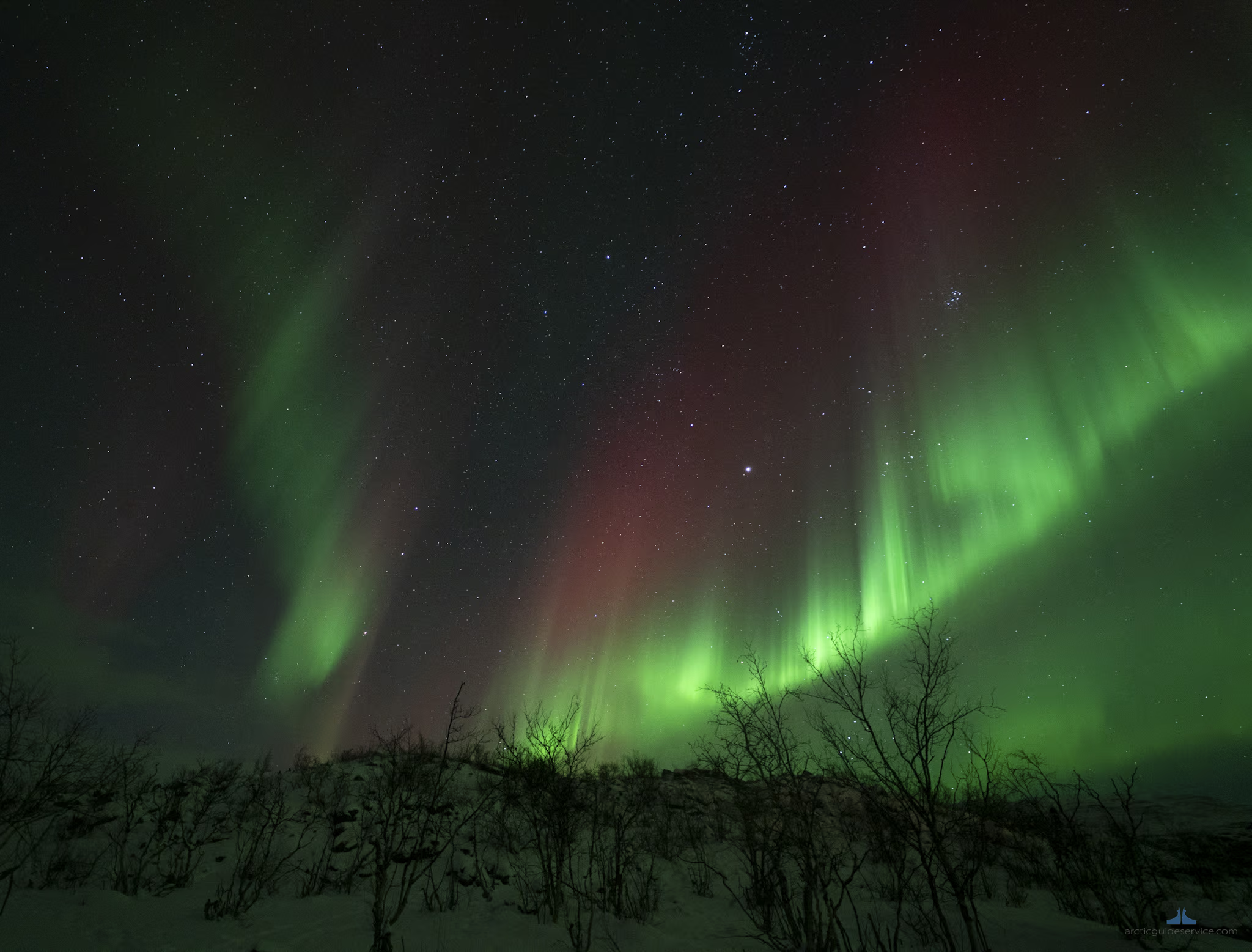
Sámi reindeer experiences near Tromsø run primarily from October through March, with some camps offering year-round visits. The evening tours, where the northern lights may appear over the lavvu while you eat bidos by the fire, are among the most atmospheric experiences available in Tromsø in winter. The daytime tours, which are better for families with young children, offer clearer views of the reindeer and the surrounding landscape.
During the first week of February, Tromsø hosts Sámi Week, a celebration around Sámi National Day on February 6th. This is an exceptional time to visit if you want a broader sense of contemporary Sámi culture beyond the tourist camp experience: reindeer racing on Storgata, lasso-throwing championships, joik concerts, and cultural events across the city.
📍 From Arctic Guide Service: Our guided tours of Tromsø include the story of the Sámi and their connection to this landscape. For a deeper experience, we can incorporate a Sámi reindeer camp visit into a private day tour tailored to your interests and schedule.
Explore Tromsø's culture with a local guide view our tours →
Get Inspired





What Our Guests Have to Say
Start Your Adventure Today
