
Tromsø or Lofoten for the Northern Lights - Which Should You Choose?
This is one of the most common questions we hear from travellers planning a Northern Norway trip. Both Tromsø and Lofoten sit directly beneath the auroral oval, the band of maximum aurora activity that rings the Earth, so in theory, either destination gives you excellent chances of seeing the lights. But they offer genuinely different experiences, and the right choice depends on what you are looking for.
We have guides based in both destinations and have been running tours in both locations for over 20 years. Here is our honest assessment.
The Case for Tromsø
"Tromsø might be best due to the selection of tours available and when the weather is bad, we can drive to find clear skies."
— Arctic Guide Service guide, Tromsø
Tromsø's biggest advantage for aurora hunting is not the aurora itself, it is flexibility. The city sits at the centre of the auroral oval at 69°N, but more importantly, it is surrounded by fjords, mountains, and accessible roads that allow guides to drive east toward Finland or inland toward Nordkjosbotn when the coastal skies are cloudy. On a night when the city is overcast, your guide can keep driving until they find a gap.
This mobility is significant. Guided tours in Tromsø regularly achieve sighting rates above 90% over a season not because the aurora appears more often, but because the infrastructure to chase clear skies is there. More tour operators, more vehicles, more route options.
Tromsø also offers more to do beyond the aurora. It is a city of 75,000 people with restaurants, museums, the Arctic Cathedral, the Fjellheisen cable car, and a full range of winter activities, dog sledding, reindeer experiences, snowshoeing that fill the daylight hours when you are waiting for darkness. If the lights do not appear on a particular night, you will not feel stranded.
📍 Best for: First-time visitors, those with limited nights available, travellers who want an organised city break alongside aurora hunting, and anyone who prefers a guided experience with professional chase logistics.
The Case for Lofoten
Lofoten makes a different argument entirely. The archipelago sits at 68°N, slightly south of Tromsø, but its position means the aurora can appear in every direction: north, south, east, and west. The mountain peaks that rise from the islands help break up cloud cover in ways that a flat coastline cannot, sometimes making it possible to glimpse the lights even through partial overcast.
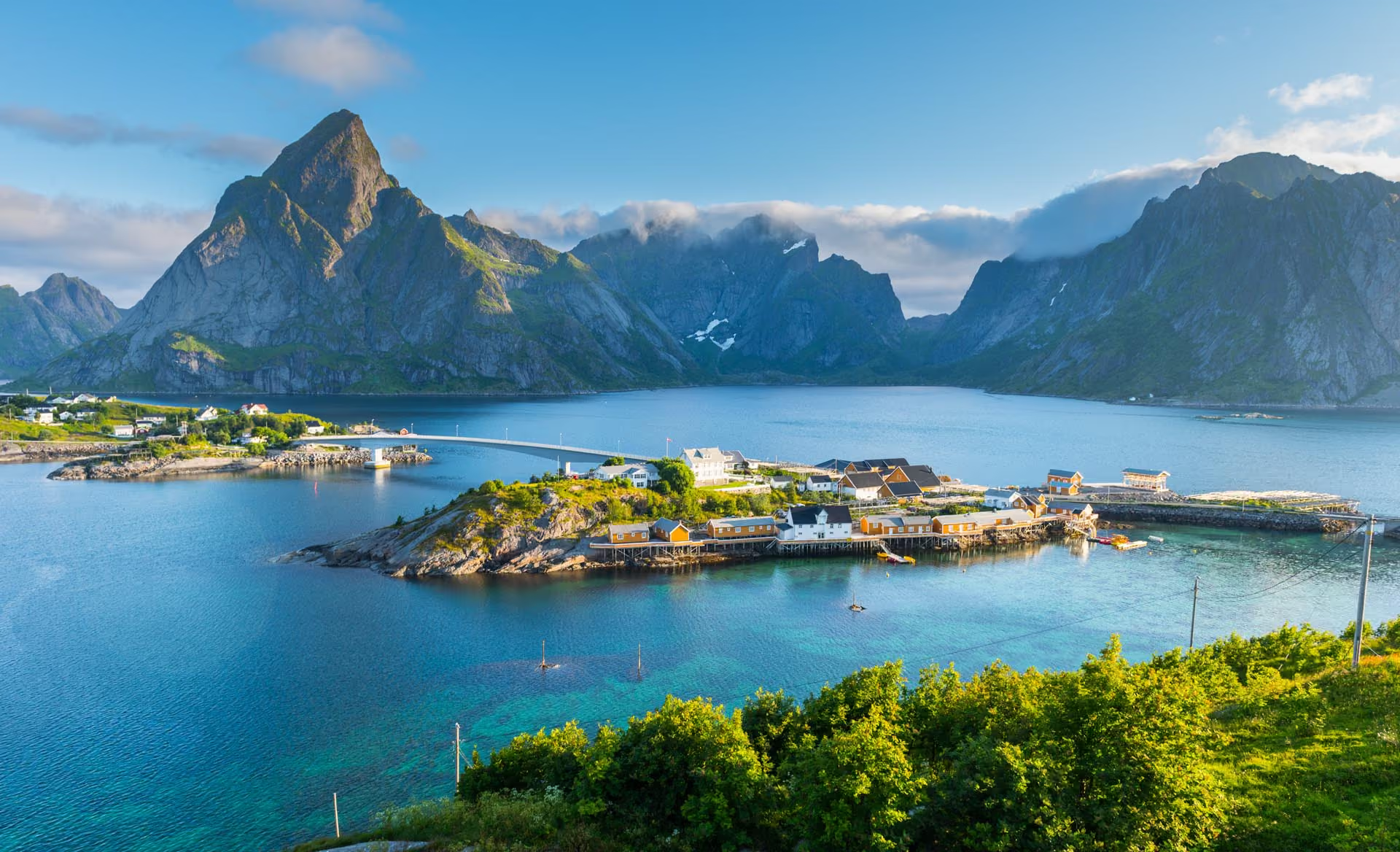
What Lofoten offers that Tromsø cannot is scenery. When the northern lights appear above Reine, above the red fishing cabins of Sakrisøy, above the mountains dropping into the sea at Flakstad the photography is extraordinary. These are images that travel blogs and photography magazines publish constantly for good reason. The backdrop transforms the aurora from a spectacular natural phenomenon into something almost unreal.
The trade-off is that Lofoten requires more independence. Fewer tour operators run organised aurora chases, and the islands are spread across a long, narrow archipelago that requires a car to navigate. On a cloudy night in Lofoten, your options for finding clear skies are more limited than in Tromsø, where guides can drive several hours in multiple directions.
📍 Best for: Photographers, independent travellers with a rental car, those visiting for several nights who want the full Lofoten experience beyond just the aurora, and anyone who has already visited Tromsø.
What Our Guides Say
"For northern lights, Tromsø is usually better because it is in the middle of the aurora zone and we can drive inland if the weather is bad. Lofoten is very beautiful, but the weather can change faster and there are fewer places to escape the clouds."
— Arctic Guide Service guide, Tromsø
This is an honest summary of the practical difference. Both destinations are genuinely excellent for aurora viewing, but if your sole goal is to maximise the chance of seeing the lights on a short trip, Tromsø's tour infrastructure gives you a meaningful advantage.
If you have more time, or if photography and the broader landscape experience are important to you, Lofoten is worth the additional planning. Several of our most passionate guests have combined both destinations on a single trip, a few nights in Tromsø for the guided experience, then onwards to Lofoten for the scenery.
A Note on Weather
Neither destination can promise clear skies. The northern lights season in both Tromsø and Lofoten runs from September to April, and cloud cover is the single most important factor in whether you see the aurora on any given night. No forecast can predict this reliably more than a few hours in advance.
What you can control is giving yourself enough nights. One night in either destination is a gamble. Two or three nights significantly improves your odds. Five nights or more, and the chances of seeing the lights at least once become very high in either location.
The Summary
- Choose Tromsø if: you have limited time, want a fully organised experience, or are visiting primarily to see the lights
- Choose Lofoten if: you are combining aurora with hiking, photography, or the broader island experience and have at least 3 nights
- Do both if: you have a week or more take a tour in Tromsø first, then drive or take the Hurtigruten to Lofoten
Get Inspired




What Our Guests Have to Say
Start Your Adventure Today
