
How Many Days Do You Need in Tromsø?
This is one of the most practically useful questions anyone planning a Tromsø trip can ask, and it gets an honest answer surprisingly rarely. Most travel guides simply say "the more the better" and leave it there, which is true but not very useful.
We have been operating tours in Tromsø since 2001. Here is what we know from watching thousands of visitors arrive, what they manage to do, and what they leave wishing they had more time for.
The Short Answer
For a meaningful Tromsø trip that covers the northern lights, one or two winter activities, and some time in the city, three nights is the realistic minimum. Four to five nights is the sweet spot for most visitors. A week reveals the destination fully.
If you are coming specifically for the northern lights, four nights should be your minimum, not three. We will explain why below.
What You Can Realistically Do at Each Length
2 Nights Possible, but Tight
Two nights in Tromsø is achievable if your goals are limited and your schedule is disciplined. You will have time for one or two guided activities and a brief look at the city. The Fjellheisen cable car, a walk along the harbour, and one northern lights tour is a realistic two-night itinerary.
The risk at two nights is the northern lights specifically. If your first night is cloudy and your tour cannot find clear skies, you have one night left. Two nights is not enough to give the aurora a real chance. You are relying on luck rather than improving your odds.
✓ Best for: Travellers already exploring a longer Norway itinerary who want a taste of the Arctic city. Manage expectations: you will see Tromsø, but not deeply.
3 Nights The Minimum for a Proper Visit
Three nights opens up the trip considerably. You now have enough evenings to attempt the northern lights on two or three occasions, which meaningfully improves your odds of a sighting. During the days you can fit in two solid winter activities: dog sledding or a Sámi reindeer experience alongside a daytime excursion, and still have a few hours to explore the city on foot.
The Tromsø City Walk, the Polar Museum, and a visit to the Arctic Cathedral are all half-day or shorter, which means they slot in easily around the bigger activities. Three nights feels busy but satisfying.
✓ Best for: Most first-time visitors who have limited annual leave. You will see Tromsø properly and have a good chance at the northern lights.
4–5 Nights The Sweet Spot
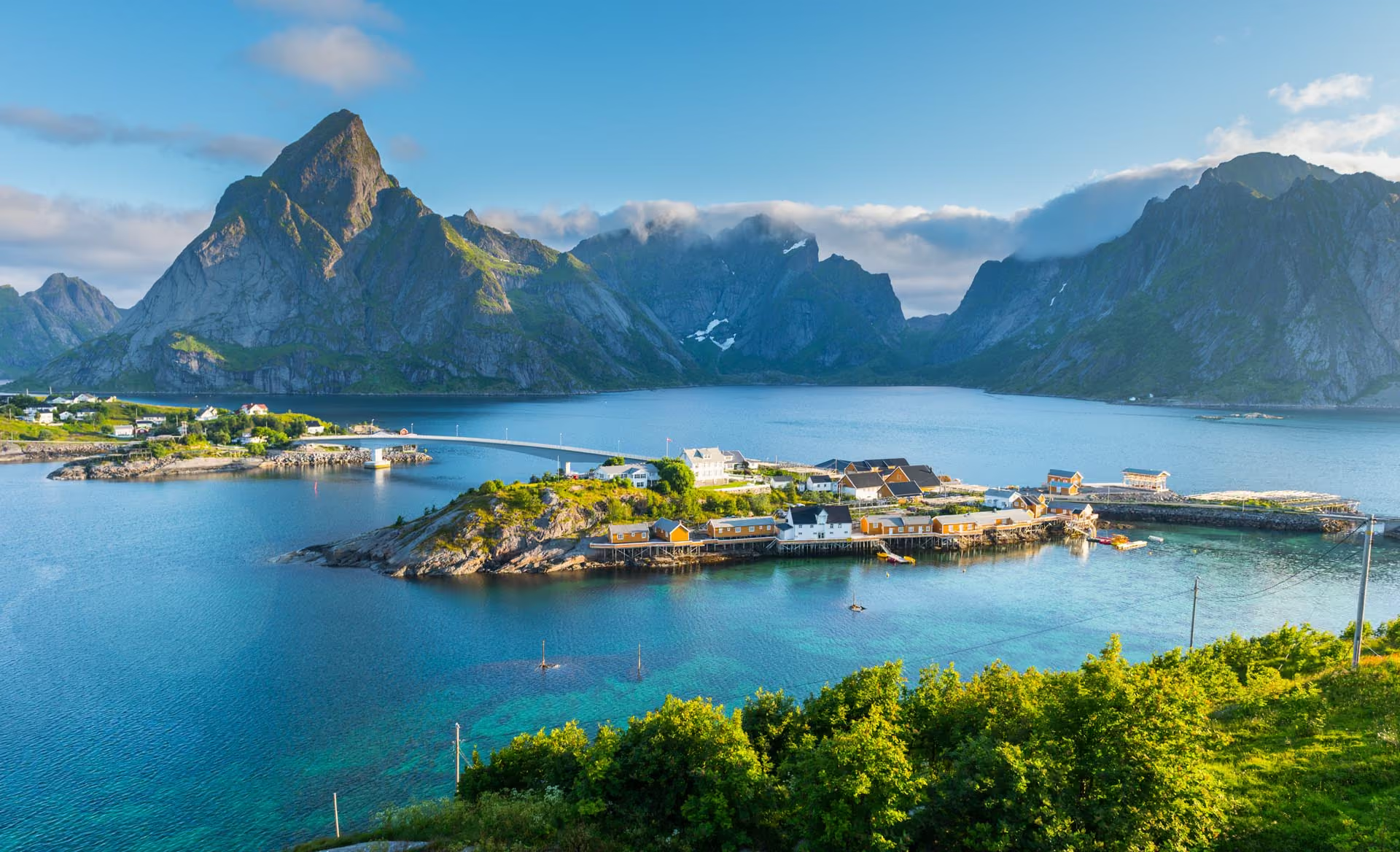
Four to five nights is where Tromsø really opens up. You have enough evenings to try the northern lights multiple times without feeling desperate about it. You can do three or four full activities without rushing. You have time to spend an afternoon simply sitting in a café watching the city, or taking an unguided drive out to Sommarøy, which is one of the most beautiful places near Tromsø and does not require a guide.
At five nights, you can reasonably add a day trip to the Lyngen Alps: one of the most dramatic mountain landscapes in Northern Norway and an excellent place for snowshoeing, ski touring, or simply being in big wilderness. The Alps are about 90 minutes from Tromsø and the contrast with the coastal city is striking.
✓ Best for: Visitors for whom this is a dedicated bucket-list trip, families who need a slower pace, photographers who want multiple shooting opportunities, and anyone who suspects they will want to come back and does not want to leave with a list of things they missed.
6–7 Nights Full Immersion
A week in Tromsø means you can do essentially everything on the activity list without feeling rushed, see the northern lights in multiple different contexts (a large group chase, a private experience, possibly from the cable car on a clear night), explore the city properly, and take at least one overnight trip out of Tromsø entirely.
A week also gives you enough flexibility to absorb a run of bad weather (two or three cloudy nights) without it derailing the trip. Winter weather in Tromsø can occasionally be overcast for several consecutive days. In a week, this is a frustration rather than a disaster.
✓ Best for: Serious aurora photographers, families with young children who need flexibility around nap times and slow mornings, and travellers making a once-in-a-lifetime trip who want to do it comprehensively.
The Northern Lights Rule
This deserves its own section because it is the single most important planning factor for winter visitors, and the one most people get wrong.
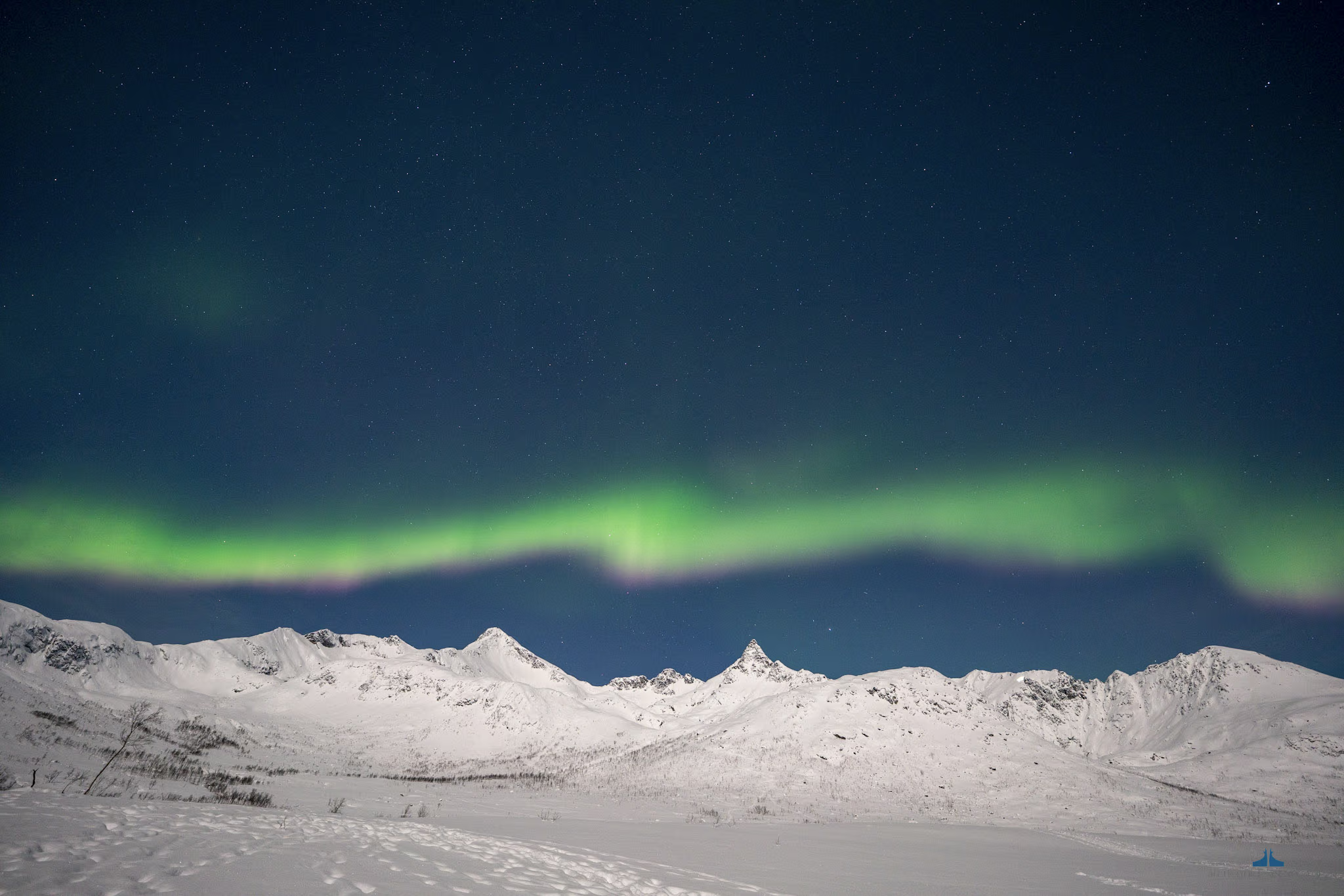
The northern lights cannot be forecast reliably more than a few hours in advance. The aurora depends on solar activity and cloud cover, neither of which obeys a travel schedule. A forecast that shows clear skies at 6pm can be completely wrong by 9pm. Conversely, a forecast that looks hopeless can break unexpectedly after midnight.
What this means practically is that every additional night you have in Tromsø is a multiplier on your chances, not a guarantee. The rough odds of seeing the lights on any given night with a guide who drives to find clear skies are very high across a full season, but those odds assume multiple attempts. On a two-night trip, one bad night halves your chances. On a five-night trip, two bad nights still leave you three good attempts.
Our recommendation: if seeing the northern lights is your primary reason for coming, book your tour for the first or second night of your stay. If you see them, wonderful; you still have the rest of the trip for other activities. If you do not see them, you have time to try again, including taking advantage of our 50% rebooking offer. Do not leave the aurora tour until your last night.
Summer vs Winter: Does the Season Change the Calculation?
Winter is unquestionably the more complex trip to plan. The northern lights, the cold, the limited daylight, and the need to book activities well in advance all add variables. Summer is simpler: activities are more flexible, the midnight sun means daylight is never a limiting factor, and the pressure to see a specific natural phenomenon on a specific night does not exist.
For summer, three nights is genuinely comfortable. You can hike, take a midnight fjord cruise, see the Arctic Cathedral in the 11pm sun, visit Polaria, and explore Sommarøy in three nights without feeling rushed.
For winter, three nights is the minimum. Four is better.
A Practical Day-by-Day Framework
Rather than a fixed itinerary (which the northern lights make impossible to plan precisely), here is how to think about building your days:
- Day 1: Arrive and explore the city on foot. Visit the Polar Museum or Polaria in the afternoon. Northern lights tour in the evening: always start here on your first night.
- Day 2: Main daytime activity. Dog sledding, Sámi reindeer experience, or snowshoeing. Cable car in the late afternoon for views. Northern lights tour or independent aurora hunting in the evening.
- Day 3: City and culture. Tromsø City Walk or guided tour in the morning. Fjellheisen upper station in the afternoon. Third aurora attempt in the evening.
- Day 4 (if you have it): Day trip or second big activity. Lyngen Alps excursion, whale watching (November–January), or a drive to Sommarøy. Private evening if conditions look promising.
- Day 5+: Slow down. Go back to a place you liked. Take a morning without a schedule. Book a private guide for something tailored. The best Tromsø experiences often happen when you stop filling every hour.
One Last Thought
Tromsø is a small city of around 75,000 people that happens to sit in one of the most extraordinary natural settings on Earth. The temptation when visiting is to fill every hour with activities. The visitors who leave most satisfied are almost always the ones who built in some time to simply be in the place: walking along the harbour at dusk, sitting with a coffee while the mountains across the fjord turn pink in the polar light, or standing outside at midnight looking up.
Whatever length of trip you plan, leave some of it unscheduled. The Arctic has a way of filling the gaps.
Ready to plan your Tromsø trip? Our local guides are here to help →
→ Browse all Tromsø tours · → Contact us to plan a private itinerary
Get Inspired




What Our Guests Have to Say
Start Your Adventure Today
